Free Shipping On All Orders | Ends 1/2
If you’re new to the world of whisky, you’ve probably noticed that there are a few variations on this rather broad category. Understandably, the range of styles, flavors, and designations can be confusing, but we wouldn’t want that to get in the way of your whisky discovery journey.
With that in mind, we’ve compiled a brief guide highlighting some of the characteristics, production processes, terminology, and flavor profiles defining bourbon, whisky, and rye. As most whisky aficionados come to know, the more you learn, the more you’ll want to learn, and before you know it, you’ll be tasting, buying, and enjoying whisky like a pro.
Today, we’re focusing on bourbon, whisky, and rye, as these types of whisky are some of the most accessible and loved spirits available.
First things first – is it ‘whisky’ or ‘whiskey’? And are these two different things?
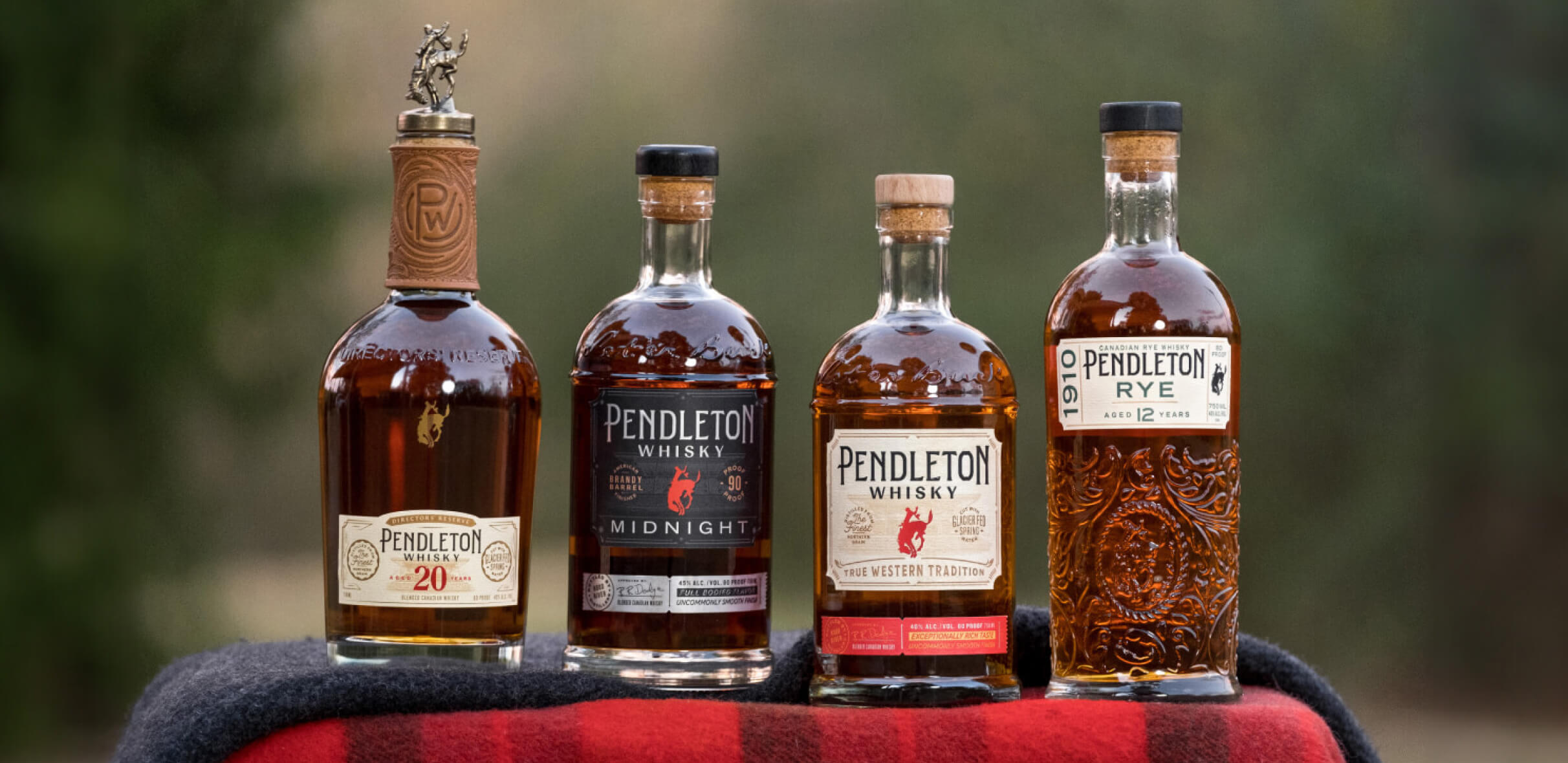
Whisky is a spelling for whiskies made in Canada, Scotland, or Japan. When spelled with an ‘e’ as in Whiskey, it denotes a grain spirit made in Ireland or the United States. Pendleton® Whisky follows Canadian whisky-making standards. The spelling ‘whisky’ differentiates it from American variants, which are typically spelled ‘whiskey.’
Rye whisky is a term often used interchangeably with “Canadian whisky,” but here’s where it gets confusing: rye whisky isn’t always Canadian—and Canadian whisky may not contain rye at all.
Technically, to be labeled as Rye Whiskey in America, it must contain a minimum of 51% rye in the mash and be aged in charred new oak barrels. This is where it is most similar to bourbon, as the same regulations apply with 51% corn in the mash instead of rye.
Canadian whisky has relatively fewer stipulations, though it must be aged at least three years in oak. The oak does not have to be new or charred in a particular way, and you’ll find many aged in barrels previously used for sherry or wine. Additionally, the blend of grains (barley, wheat, corn, and rye) in the mash can be any proportion or combination. Canadian whisky also allows up to 9.09% ‘other’ ingredients for flavoring or coloring, often another spirit. For example, some producers use that allowance to add bourbon, sherry, or scotch to add complexity.
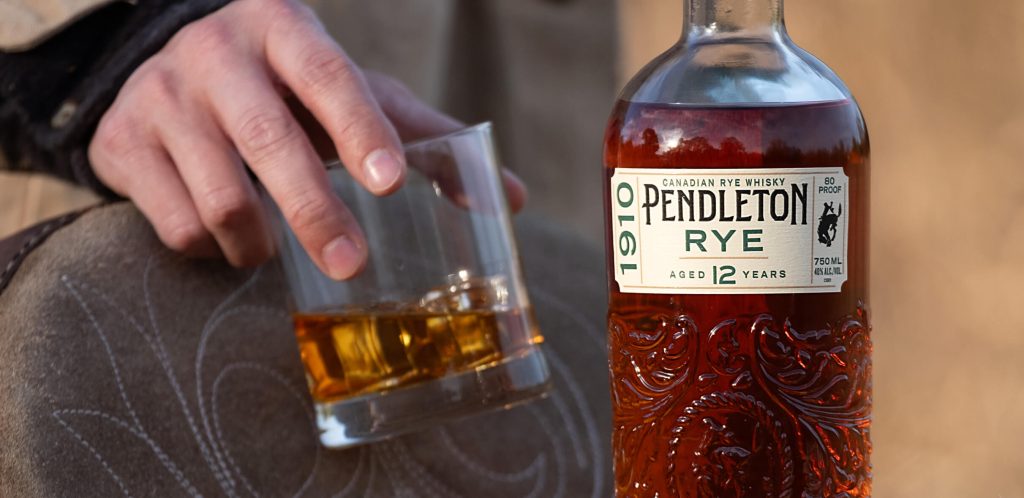
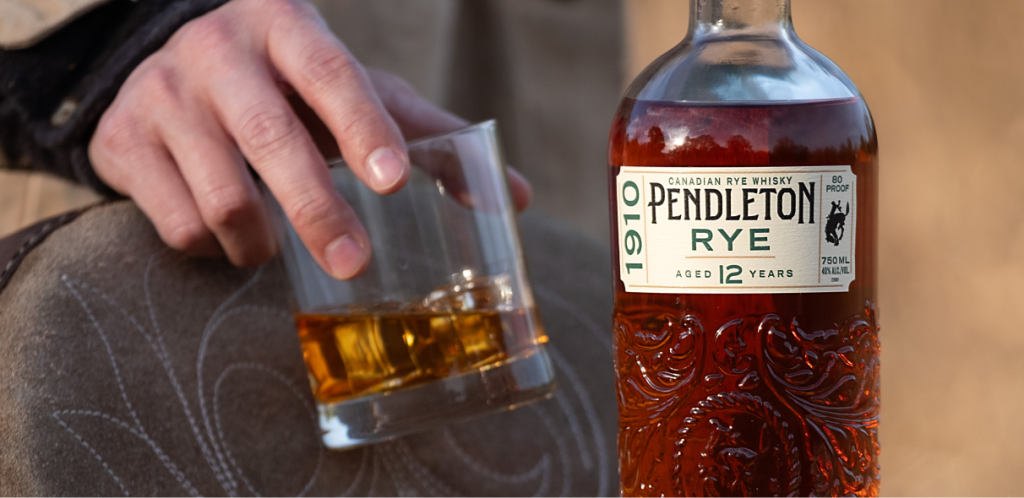
Pendleton® 1910 Rye is made from 100% rye, distilled in Canada, and aged for a minimum of 12 years in cask, making it a premium rye whisky with a distinct character, aroma, and flavor profile that is spicy and peppery with dried fruit notes.
American rye whiskey must also be aged at least two years and cannot be blended with other spirits. American rye whiskey contains at least 51% rye aged a minimum of two years and is not blended with other spirits. Canadian Whisky is aged for three years, might be blended, and may not have rye in the mash.
Bourbon must contain at least 51% corn in the mash and is aged in new oak barrels. To be labeled ‘straight bourbon,’ the whiskey must be aged for at least two years and contain no coloring or flavoring. Bourbon that is labeled ‘blended’ may include coloring, flavoring, or other grain spirits.
So, although bourbon is whiskey, its distinction is that it’s made with a high percentage of corn, making it distinctively sweet with new oak aromas and flavors like vanilla and caramel. Some bourbons are 100% corn, while others rely on other grains, including rye. If rye is part of the mash, the resulting spirit will be a little spicier than a typical bourbon but softer and sweeter than rye whiskey. Basically, bourbon is mostly corn whiskey aged in new barrels, has no minimum aging requirements, and is made in the US.
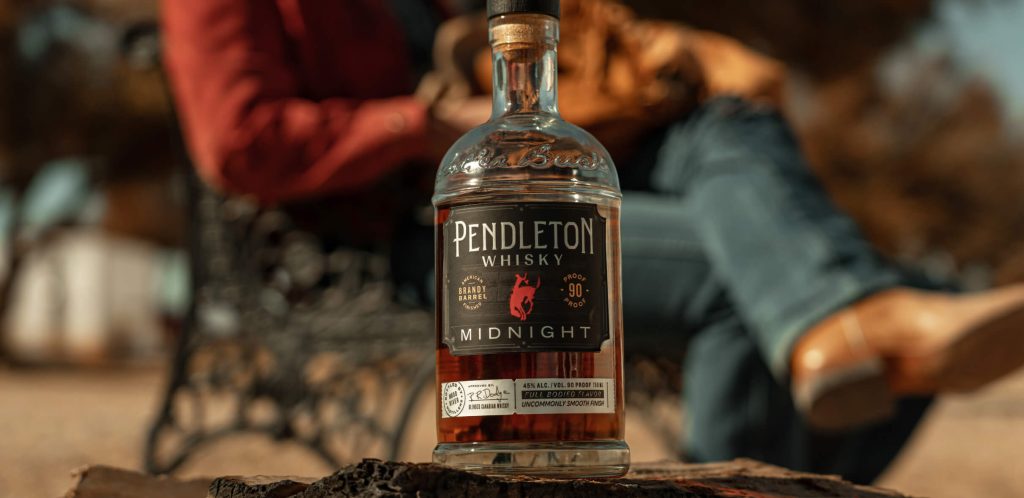
The smooth taste and finish of Pendleton® Whisky is renowned among whisky lovers. Order online and add a few bottles to your collection today.